September 15, 2026
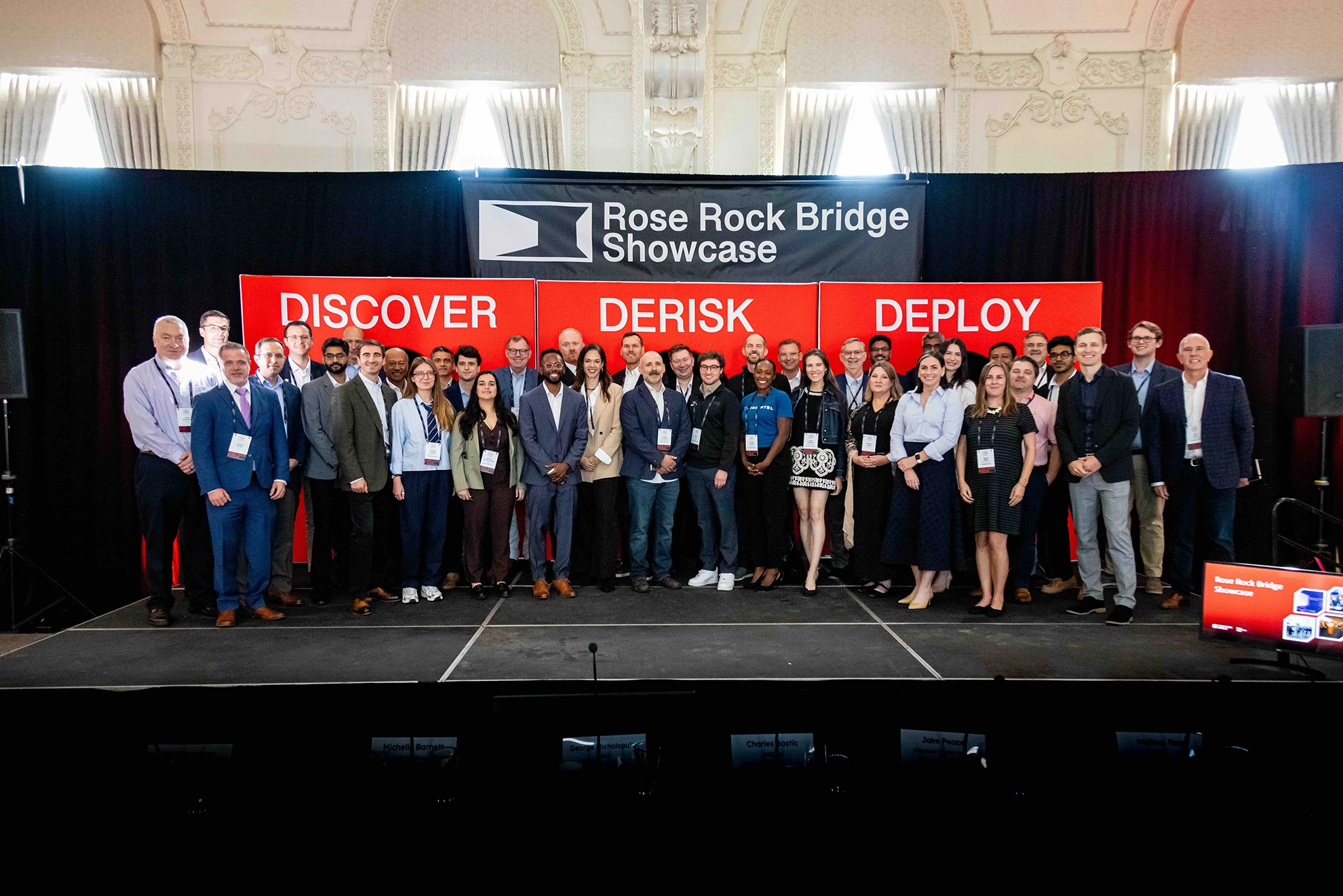
Rose Rock Bridge Awards Four Startups $400,000 to Scale Energy Innovations and Drive Local Job Growth in Tulsa
Read blog post
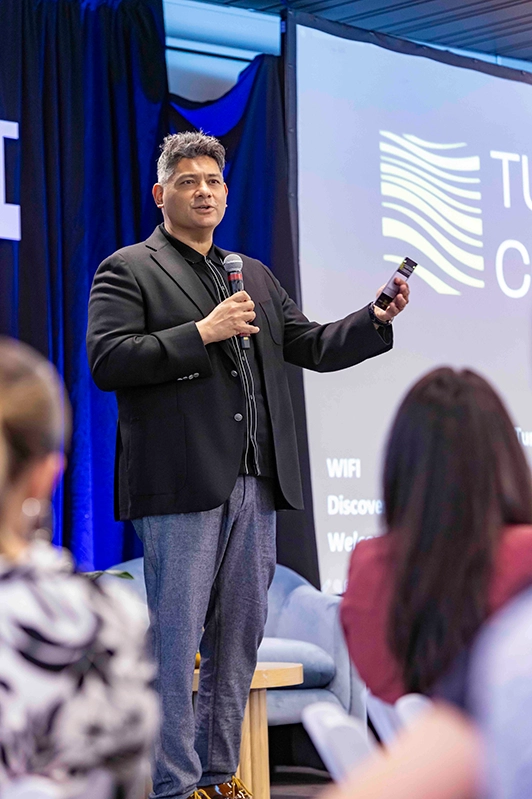
Why the Most Effective Companies Are Rethinking Performance Reviews. By Lawrence Ganti, Director of Workforce & Talent
Performance reviews have been a cornerstone of talent management for decades. Yet despite the countless hours invested in annual evaluations, calibration sessions, ratings discussions, and documentation, many leaders continue to ask the same question: Are performance reviews actually improving performance?
Over the course of my career, I have had the opportunity to lead organizations ranging from large global enterprises to venture-backed startups. I have participated in performance management cycles at Merck, designed and implemented performance systems in high-growth organizations such as Serono and SIO2 Materials Science, and scaled startups where performance management often evolved in real time alongside the business.
One of those systems ultimately became a Harvard Business School case study and received recognition for its innovative approach to aligning employee development, business outcomes, and organizational culture.
What I learned through those experiences is that performance management is rarely a process problem. It is usually a leadership problem, a culture problem, or a strategy problem.
Today, employers across industries are confronting a new reality. Technology is changing faster. Employees expect more frequent feedback. Skills requirements are evolving continuously. Career paths are becoming less linear. And organizations are increasingly competing for talent rather than simply managing it.
As a result, performance management is undergoing one of the most significant transformations in decades.
The most important question is no longer: “How should we evaluate employees?”
The more relevant question is: “How do we create a system that continuously develops talent?”
WHY THIS MATTERS
Through employer roundtables, workforce discussions, and talent strategy conversations, one message continues to emerge consistently. Employers are increasingly concerned about:
These same themes repeatedly surface as barriers to growth for employers across advanced manufacturing, energy technology, aerospace, autonomous systems, and other hard-tech industries. What is often overlooked is that performance management sits directly at the center of all five challenges.
Performance reviews are no longer simply an HR process. Increasingly, they have become a strategic workforce development tool.
TREND 1: THE ANNUAL REVIEW IS LOSING RELEVANCE
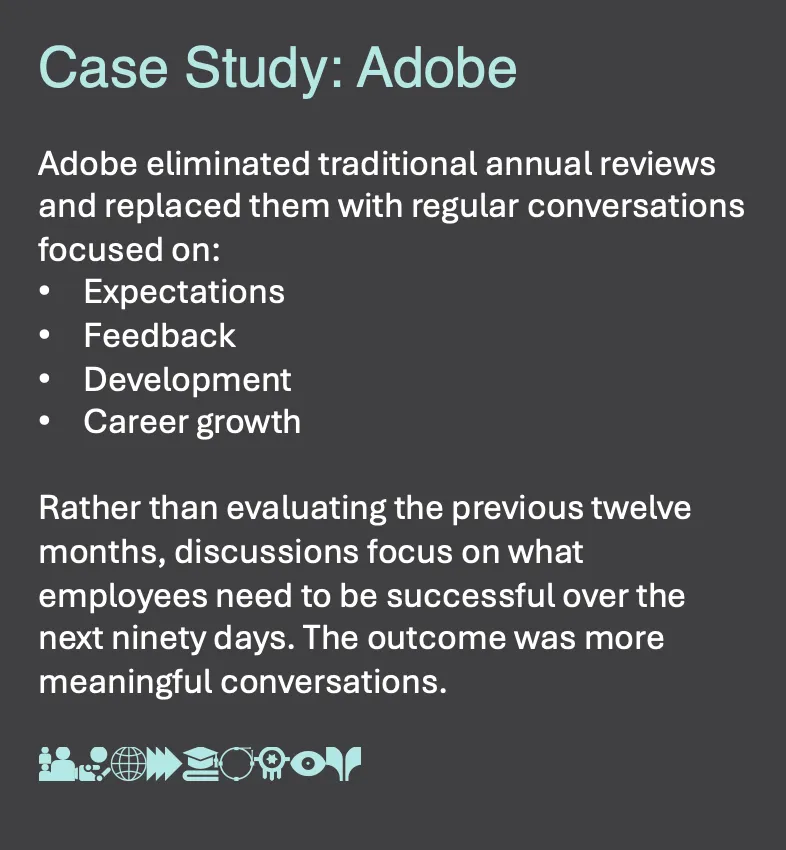
Traditional annual reviews were designed for a different era. Business objectives remained relatively stable. Employees often remained in the same role for extended periods. Skill requirements changed gradually.
Today, most organizations operate in quarterly planning cycles. Teams are reorganized more frequently. Technology adoption accelerates continuously. Many employers now report that annual reviews feel disconnected from the pace of work.
As a result, organizations are shifting toward continuous feedback models.
Leadership Perspective
One lesson I learned repeatedly throughout my career is that employees rarely complain about receiving too much feedback. They complain about receiving feedback too late.
Organizations often spend months perfecting annual review processes when the real opportunity is improving the quality and frequency of manager conversations.
TREND 2: SKILLS ARE BECOMING MORE IMPORTANT THAN TASKS
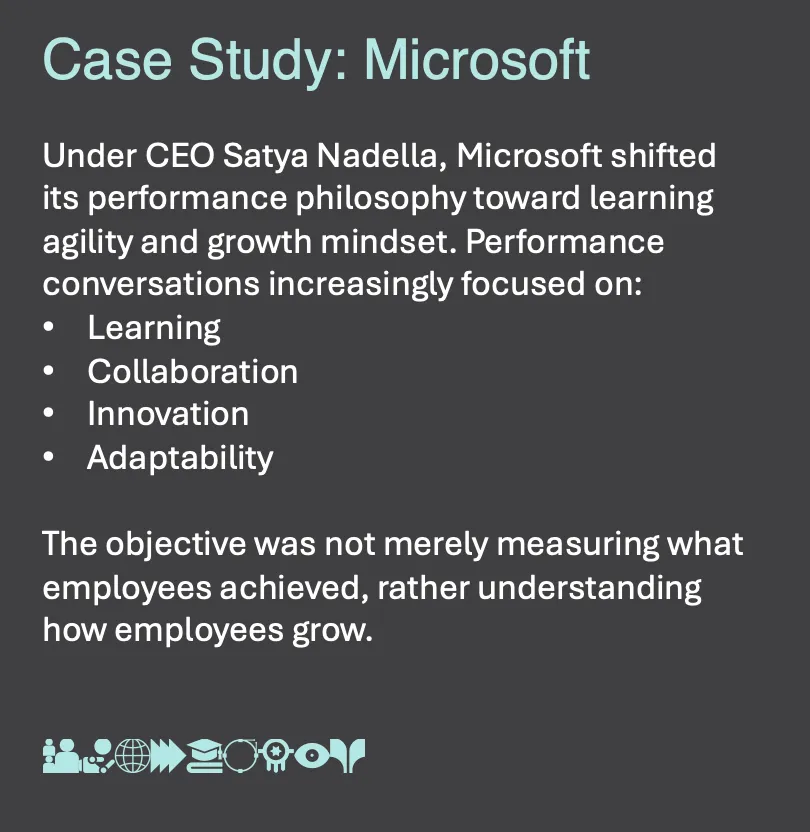
Historically, performance reviews focused heavily on outputs: Did the employee hit the target? Did they complete the project? Did they achieve the objective?
Those measures remain important. However, employers increasingly need visibility into something different: Can this employee adapt? Can they learn? Can they solve new problems? Can they lead others through change?
The future workforce will increasingly be defined by durable skills rather than static technical capabilities alone.
Leadership Perspective
The strongest performers I have worked with throughout my career were not always the most technically capable. They were often the most adaptable. The employees who continuously learned new skills, embraced change, and helped others succeed consistently outperformed peers overtime. Performance systems should identify and reward those capabilities.
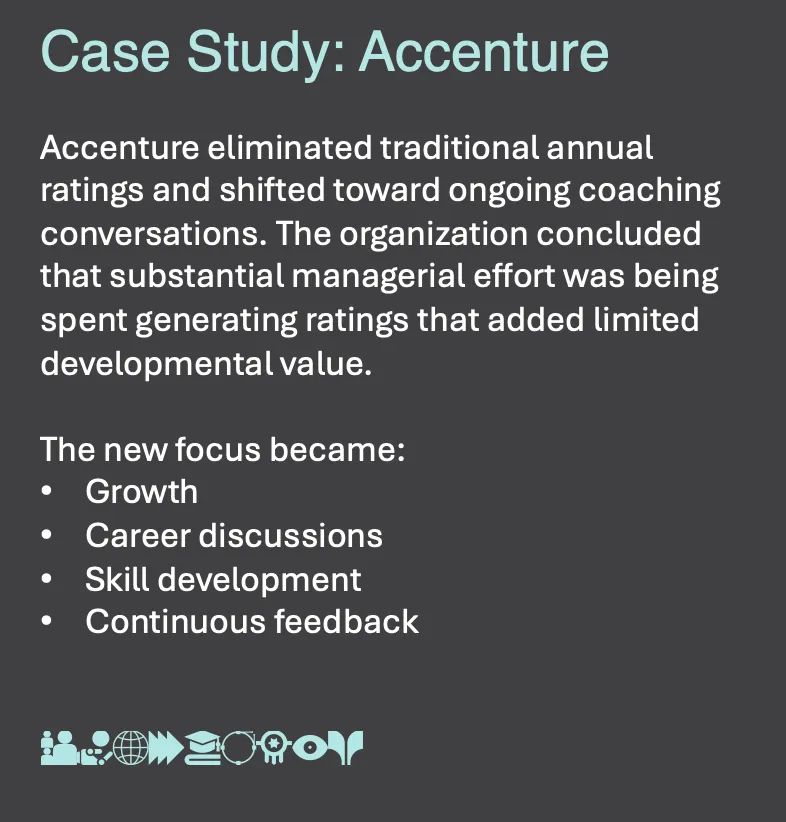
TREND 3: MANAGERS ARE NOW COACHES
Perhaps the most significant change occurring in performance management is the changing role of the manager. Historically: Manager = Evaluator. Increasingly: Manager = Coach
Organizations are realizing that retention, engagement, and development are more heavily influenced by manager quality than by performance rating systems.
Leadership Perspective
One of the most common mistakes organizations make is assuming managers naturally know how to coach. Most do not. Many supervisors were promoted because they were excellent individual contributors. Coaching requires an entirely different skill set. Organizations that want better performance management often need better manager development before they need a better performance review form.
TREND 4: AI WILL CHANGE PERFORMANCE MANAGEMENT
Artificial intelligence is beginning to influence nearly every aspect of talent management. Performance management will be no exception. Emerging applications include:
AI will make performance management more data-rich. However, it should not replace human judgment. The future is likely a combination of technology-enabled insights and manager-led coaching. The best organizations will leverage AI to improve conversations, not eliminate them.
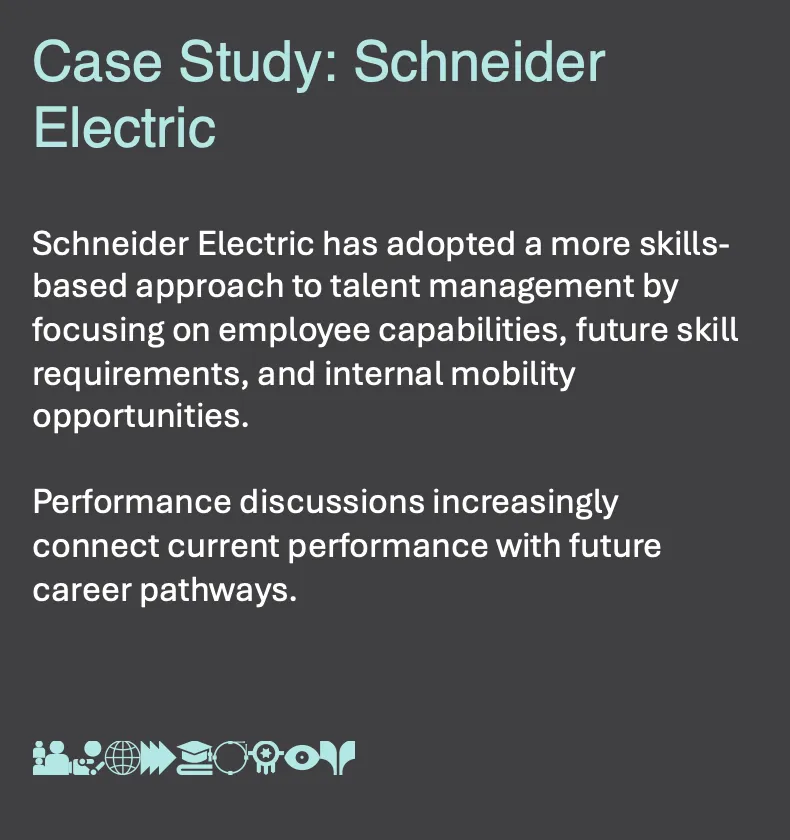
TREND 5: CAREER DEVELOPMENT IS THE NEW RETENTION STRATEGY
Employees increasingly view performance discussions through a different lens.They want answers to questions such as: What comes next? How do I advance? What skills should I develop? What opportunities exist inside the organization?
Compensation still matters. But career growth increasingly drives engagement and retention.
Leadership Perspective
The best performance conversations I have ever participated in were not compensation discussions. They were career discussions. Employees want to know whether they have a future inside the organization. Performance management should help answer that question.
THE HARDEST PART: CHANGE MANAGEMENT
Despite broad recognition that traditional systems often fall short, changing performance management remains difficult. Why? Because performance management is deeply connected to:
In my experience, the technical design of a performance management system is often the easiest part. The real challenge is helping managers adopt new behaviors. Organizations frequently underestimate the change management effort required. New forms, new software, and new rating scales rarely solve the problem. New leadership behaviors do.
QUESTIONS FOR EMPLOYERS
As organizations evaluate their approach to performance management, five questions are worth considering:
FINAL THOUGHTS
After leading performance management systems in organizations ranging from global enterprises to startups, and after having held more than 50 employer conversations in the last few months, my perspective has become increasingly simple:
The future of performance management is not about ratings. It is about capability building.
The organizations that will win the competition for talent are not necessarily those with the most sophisticated review systems. They will be the organizations that create continuous learning cultures, develop strong managers, and help employees see a future within their company.
Performance management is no longer an HR process. It is a talent strategy. And increasingly, it may be one of the most important talent strategies an organization has.
You are connecting with Chase, part of our government entities team
You are connecting with Abisoye, part of our community organizations team
You are connecting with Lawrence
You are connecting with our local and national business team.