October 6, 2026
Q3 Digest: National awards, a new cohort of startups, and a growing global footprint
Read blog post
TIL's Director of Workforce & Talent discusses the importance of training Tulsa’s talent to adapt and thrive in new roles and preparing workers, educators and employers to meet the demands of the future.

Lawrence Ganti, Director of Workforce & Talent, brings a wide breadth of knowledge, experience and instinct to his work at Tulsa Innovation Labs. As the labor market continues to evolve into advanced industries, the importance of training Tulsa’s talent to adapt and thrive in new roles cannot be understated. Keep reading to hear how Tulsa Innovation Labs is working to prepare workers, educators and employers to meet the demands of the future.
With experience across five continents, how do you view Tulsa’s workforce needs within the context of global education-to-employment trends—and what made this work feel compelling now?
Across every market where I’ve lived and worked, one constant holds true: people pursue education to prepare for their future, and that future is closely tied to earning a living. As the cost of education continues to rise, the return on investment matters more than ever. This requires a stronger alignment between education and job readiness, specifically, pathways that lead to meaningful employment with livable wages. To achieve that, the needs of employers must be a core input in the design of education and workforce programs.
Another major trend—particularly evident in the United States and in Tulsa—is the reshoring of manufacturing. This shift is driving significant demand for skilled trades. Trade schools offer faster, more affordable pathways to employment and a much quicker return on investment. Electricians, plumbers, and carpenters are already in high demand, and that demand will only grow. Simply put, there is not enough skilled, job-ready talent to meet current and future needs.
With your unique blend of global leadership experience — from scaling advanced manufacturing sites during Operation Warp Speed to running billion dollar businesses to mentoring founders at Babson and Techstars — how are you applying that operator mindset here in Tulsa to build a data-driven talent pipeline, and what do you see as the most immediate opportunities for Tulsa to position itself as a future hub for advanced industries?
After 30 years of experience building and leading organizations where people are the #1 asset, I have learned that adaptability and learning agility are what prepares teams to succeed. As advanced industries—like autonomy, aerospace and innovation, and advanced manufacturing—continue to evolve, we need to have a workforce that is ready to evolve along with them. For Tulsa to succeed as a future hub for advanced industries, leadership and workers must be comfortable with uncertainty and change.
From your vantage point overseeing these initiatives, what are the biggest bottlenecks today to scaling inclusive tech workforce pathways in Tulsa, and what innovations (policy, partnerships, funding) will help overcome them?
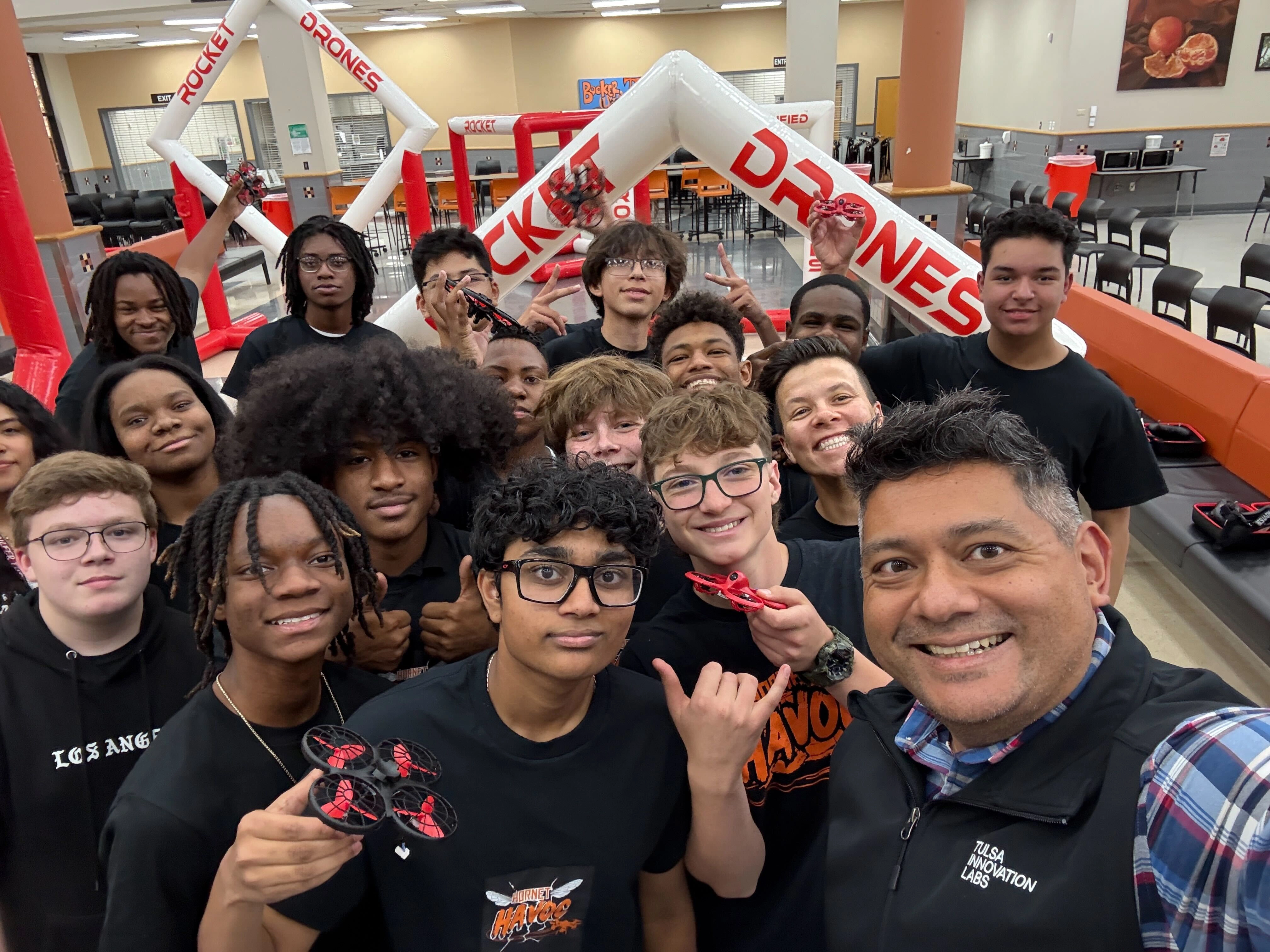
There are two primary bottlenecks. The first is awareness—many young people, particularly at the middle school level, lack clear visibility into what jobs exist, the pathways required to access them, what those roles pay today and how compensation and advancement progress over time.
The second bottleneck is the disconnect between educators and employers. In many cases, curriculum and educational content lag behind workforce needs, especially when compared to European and Asian systems. In a typical U.S. bachelor’s degree program, students often don’t meaningfully engage with job-specific disciplines until their third year. This reflects a long-standing emphasis on producing “well-rounded” students, with the first two years focused broadly on arts, sciences and humanities. That model is increasingly outdated. In an era defined by AI and ubiquitous access to information, broad exposure no longer requires a rigid, front-loaded academic structure.
At Tulsa Innovation Labs, our work is focused on reducing, and where possible removing, these bottlenecks. We support educators and community-based organizations with programming that gives students early, concrete exposure to career pathways. At the same time, we use data and direct employer input to help inform and modernize degree programs, curricula and workforce training content.
As mobility, manufacturing, autonomy, tech, and aerospace converge in Tulsa, how do you plan to scale training capacity and ensure job quality (wages, career progression) rather than just volume?
First, we need to ensure we are preparing a workforce that is adaptable, not narrowly trained for a single role. To use a sports analogy, we need people capable of competing in a decathlon, not just a single event. Over time, our education and training systems have shifted away from developing strong generalists and toward producing highly specialized talent. In an era defined by rapid change and uncertainty, that imbalance creates risk.
What we need instead are individuals with strong foundational capabilities—people who can transfer their skills and experience across roles, industries and technologies. That means prioritizing what we call “durable” skills, often referred to as soft skills: critical thinking, communication, problem-solving and adaptability. These capabilities apply across jobs and persist even as tools and technologies change. Employers can and do train for their specific systems and platforms; what’s harder to teach are these underlying competencies.
For us, scale is not just about expanding training programs, it’s about scaling talent itself.
You are connecting with Clay, part of our government affairs team
You are connecting with Abisoye, part of our community organizations team
You are connecting with Lawrence
You are connecting with our local and national business team.