October 6, 2026
Q3 Digest: National awards, a new cohort of startups, and a growing global footprint
Read blog post
Why Xponential 2026 Proved Tulsa's Autonomous Systems Ecosystem is Ready
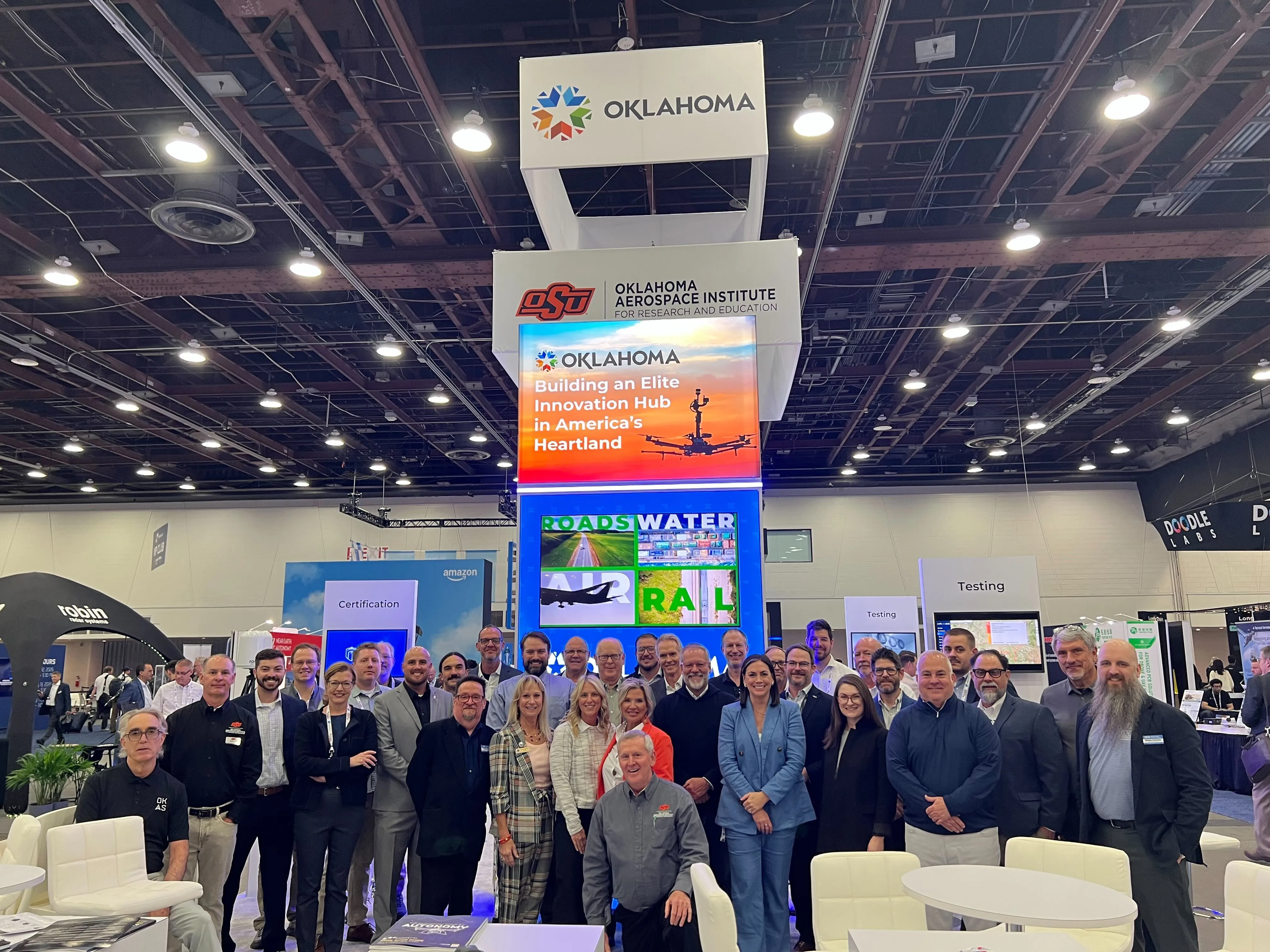
Tulsa Innovation Labs joined 10,000+ attendees from 60+ countries at the 2026 Xponential Show in Detroit, the world's largest autonomous systems event. With booth visitors from 40 states and 12 countries, TIL showcased the region's capabilities as a federally designated Tech Hub for autonomous systems—a single location where the industry can develop, test, launch, and scale UAS innovations.
Why it matters: As autonomy moves from demonstration to deployment, the industry needs infrastructure, policy support, and supply chain capabilities to enable safe and scalable adoption. Tulsa has built a coordinated ecosystem to deliver exactly that.
The market context:
These industry tailwinds are creating real demand for the capabilities Tulsa has been building.
Challenge 1: Scaling from Prototypes to Industrial Production
Industry is transitioning from innovation to manufacturing. Modern defense and commercial operations demand drones by the thousands, not the dozen, which requires a shift in capabilities across components, materials, manufacturing capacity, workforce, and training—all needed to turn prototypes into production volume. Building 4,000 systems requires fundamentally different processes and skills than building 10.
Tulsa's advantage:
Challenge 2: Regulatory Certainty & BVLOS Operations
The FAA's Part 108 BVLOS Notice of Proposed Rulemaking drew over 3,000 comments in late 2025, demonstrating interest in moving from case-by-case waivers to standardized operating permits.
Why it matters: Executive Order 14307 imposed deadlines on the FAA to finalize regulations in 2026. The new framework will fundamentally reshape commercial drone operations by enabling routine BVLOS missions. Companies need testing environments to validate operations and generate compliance data under evolving regulatory frameworks.
Tulsa's advantage: The Skyway Range BVLOS testing corridor provides companies with 1,200 square miles of urban/rural proving ground to:
Challenge 3: Defense Contracting & Trusted Cybersecure Supply Chains
The Department of War's $1B Drone Dominance Program aims to purchase over 200,000 small drones by 2027, with an initial phase including $150 million in orders for roughly 30,000 systems.
Why it matters: DoW's second-ever Drone Dominance Industry Day at Xponential signaled a strategic shift. This isn't about finding promising technology. It's about establishing repeatable production capability with trusted supply chains. Conference sessions emphasized secure-by-design principles, zero-trust architecture, and reducing foreign-sourced components.
Tulsa’s advantage: The Defense Innovation Pathways initiative in the region directly addresses this challenge by:
Challenge 4: Workforce Development for Autonomous Systems
Conference sessions emphasized that "as autonomy scales, the limiting factor is no longer technology, it is talent," with focus on experiential education shaping a workforce capable of integrating and deploying complex systems at scale.
Why it matters: The autonomous systems industry requires cross-disciplinary skills—combining aviation knowledge, software proficiency, cybersecurity awareness, and advanced manufacturing expertise—that traditional education pathways don't yet produce at scale.
Tulsa’s advantage: TIL's workforce training and talent pipeline development initiatives are addressing this gap through:
Validating Tulsa’s Model: A Real-World Strategic Value Proposition
Manna Air Delivery CEO Bobby Healy's announcement of moving manufacturing to Tulsa validates Tulsa’s ecosystem approach. TIL's fireside conversation with Manna at the conference explored how policy momentum, regional strategy, and ecosystem readiness determine which regions lead as the industry scales.
On choosing Tulsa, Bobby Healy explained: "It has a red carpet rolled out for this industry, everything from an existing strong aerospace sector, to a governor that's leaning into the sector, to a mayor that's leaning into the sector, to Tulsa Innovation Labs to create the environment that we need. You literally get Goldilocks, meaning it has all of the factors required for success, which is a rare thing to find."
Tulsa's advantage:
The Partnership Advantage
TIL attended Xponential alongside the State of Oklahoma, Oklahoma Aerospace Institute for Research and Education (OAIRE), Skyway Range, meerir, OK Autonomous, Oklahoma Manufacturing Alliance, Oklahoma Cyber Innovation Institute at the University of Tulsa, AirWise Solutions, Advanced PMC, and Revolution Precision Machining—demonstrating the cross-sector collaboration that makes Oklahoma's ecosystem work.
Tulsa Innovation Labs serves as the central coordinating body for the region’s autonomous systems ecosystem by:
What's next: Companies facing challenges around scaling production, navigating defense contracting, accessing BVLOS testing, building talent pipelines, or establishing trusted supply chains should engage with TIL to explore how Oklahoma's ecosystem can accelerate growth and de-risk expansion.

You are connecting with Clay, part of our government affairs team
You are connecting with Abisoye, part of our community organizations team
You are connecting with Lawrence
You are connecting with our local and national business team.