September 15, 2026
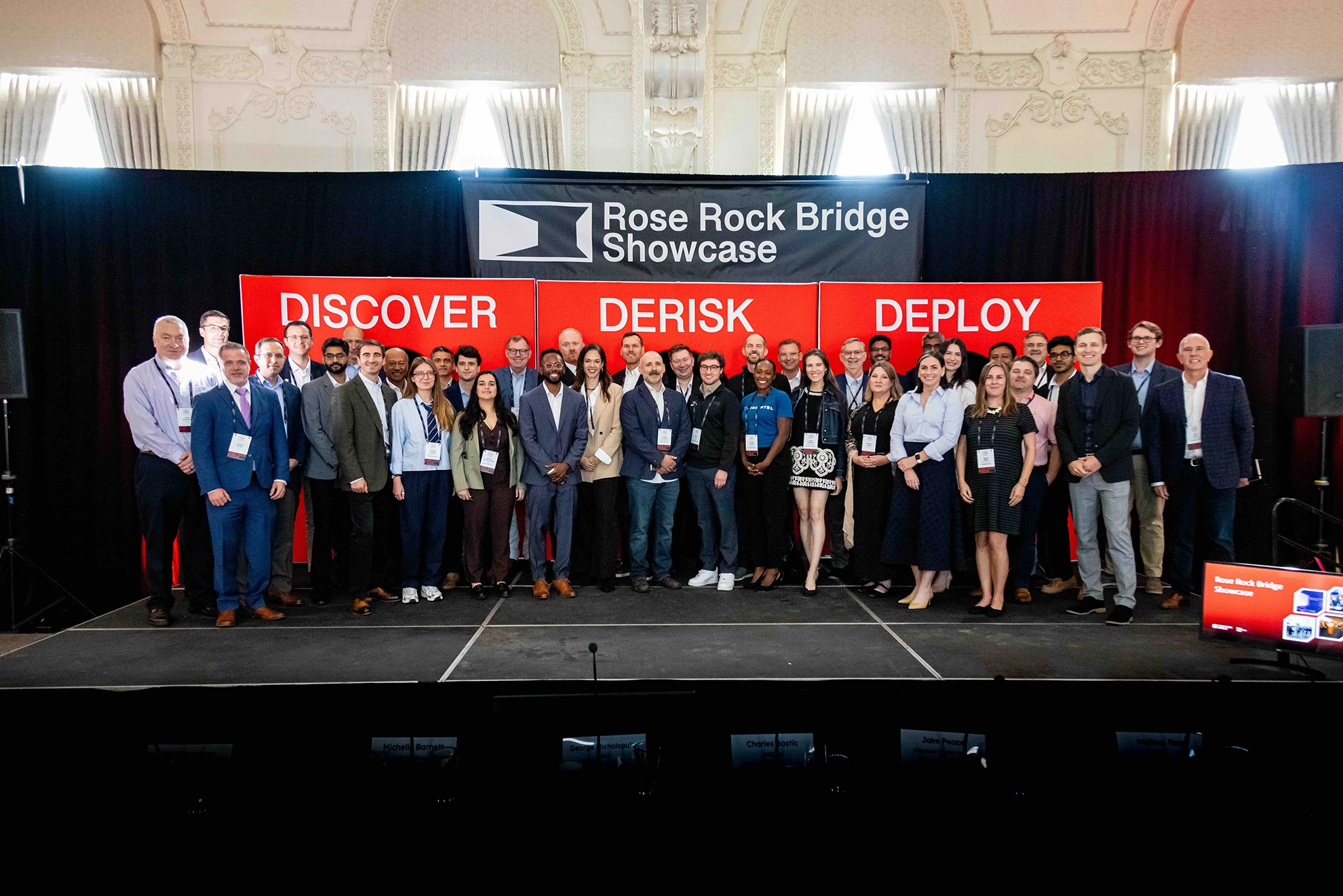
Rose Rock Bridge Awards Four Startups $400,000 to Scale Energy Innovations and Drive Local Job Growth in Tulsa
Read blog post
What Tulsa Airports' Performance Overhaul Reveals About the Post-Skills Talent Model
Tulsa Airports Improvement Trust (TAIT) employs roughly 150 people across Tulsa International and Riverside airports, with most based at Tulsa International. Several thousand more work at Tulsa International every day.
Ask a traveler who pushes the wheelchairs, checks bags at the gate, or drives the parking shuttle, and most will assume it's an airport employee. Usually, it isn't.
"People often think a lot of employees work for the airport. Many individuals work at the airport, but they don't necessarily work for the airport. It's a lot like a mall—we're all in the same building, serving the same customers, but we don't all work for the same company. That said, the airport works closely with our tenants and partners to create a consistent, positive customer experience for everyone who comes through our doors." Amanda Bryson, Director, Human Resources, Tulsa Airports Improvement Trust
Each of those roles is typically run by a different third-party vendor — hired, trained, and managed entirely outside TAIT's own org chart. Bryson can't dictate what any of those vendors teach their employees, or who they choose to hire. What she can control is the roughly 150 people who work for her directly — and that's where she chose to make her stand.
It's an extreme version of a problem every employer is starting to recognize: the skills a job requires shift faster than job descriptions can keep up, and increasingly, employers don't fully control who does the work or what they've been trained to do. If you can't count on controlling either one, what do you actually hire, train, and promote for?
The easy answer over the last two years has been "skills-based hiring": drop the degree requirement, screen for demonstrated ability, keep a running list of in-demand skills like data literacy or AI fluency. It's not wrong, exactly. But it has a shelf life: a skills list is a snapshot of today's technology, and technology is the thing moving fastest.
Durable, human skills already show up in seven of the ten most-requested attributes in job postings, nearly four times as often as specific technical skills. 78% of employers say they've hired someone who was technically strong on paper but failed anyway, because the fit wasn't there. 92% of organizations now say interpersonal skills matter more to workplace success than technical expertise.
So if skills aren't the durable thing, what is? Bryson's answer went through a full rebuild of the airport's performance management system to arrive at a unique answer: stop trying to future-proof a skills list, and instead build a leveled framework around core competencies that don't change no matter what the job requires next.
Bryson didn't start from a blank page — the airport already had a competency framework. It just didn't mean much to the people using it.
"One of them was called intellectual horsepower. Do you know what that means? Because I don't."
This year, working with the airport's leadership team, she rebuilt it around six competencies that are hard to argue with:
- Trust & integrity
- Accountability
- Decision quality
- Collaboration
- Adaptability
- Communication
She wrote two versions of each competency, one for individual contributors and one for leaders, so the expectation scales with responsibility instead of staying flat.
"While we say the skill sets might change, I feel that the underlying competencies don't. Trust is always the key to establishing a strong culture and relationship with your team. That doesn't change. Accountability is always expected regardless of company position or title."
What changes at each level is how the competency is demonstrated. An individual contributor shows trust one way; a leader is expected to show it at a higher bar. The leveling did something Bryson didn't fully anticipate going in - it gave people a career map.
It gave leaders the tools to explain more directly to their employees — their impact, and a clear line of sight into what it actually takes to move up, instead of a title change with no explanation behind it.
A competency framework only works if you can assess for it in performance reviews, and just as importantly, at the point of hire. Bryson doesn't ask candidates to describe their own trustworthiness in the abstract. She asks for evidence.
"I would ask questions along the lines of, tell me about a time when you had to deal with a difficult coworker, and how you regained trust there. It's hard to measure integrity, but you can do it."
It's a deliberate move away from skills checklists and toward behavioral interviewing, treating trust and integrity as a single competency you can probe for with the same rigor as any technical qualification.
The real test of a competency framework isn't the document — it's whether different leaders rating the same behavior land in the same place. This year, for the first time, Bryson introduced calibration: leadership sitting down together to align ratings before they go final.
"I ripped the band-aid off. It was a risk. It was a leap. There was no guarantee that leaders would be comfortable sharing both the strengths and the shortcomings of their team, or that they'd be willing to listen."
What surprised her wasn't that it worked. It was who it worked for.
"I was surprised at how receptive leaders were to feedback, rather than defensive or worried it reflected poorly on them."
That detail matters more than it might seem. Competency frameworks and calibration are usually assumed to work best in leadership suites, with less confidence about how they'll land on the front line. Bryson's experience suggests otherwise: a clear, leveled set of behavioral expectations can travel just as well onto an airport field maintenance team or a police officer as it does into a management suite, arguably more easily, since vague, undefined "professionalism" never worked especially well there to begin with.
None of this is happening in isolation. Performance management is undergoing a broader shift in 2026, away from once-a-year, skills-checklist reviews and toward structured competency frameworks with calibration built in. The logic tracks with what AI is doing to the value of raw technical skill: as routine technical work gets automated, human value shifts toward judgment, review, and accountability — precisely the competencies Bryson chose to organize around.
1. Separate what's durable from what's teachable. Name three to five competencies that would matter no matter what technology or role changes next — then stop trying to keep a skills list current in real time.
2. Level each competency by seniority. The same competency should mean more, not something different, as responsibility increases.
3. Interview and review behaviorally. Ask for evidence of the competency in action, not a self-rating of it.
4. Pilot calibration everywhere, not just in the office. First-line supervisors and technical teams can handle — and benefit from — the same rigor as leadership.
For a workforce that's more commercial hub than org chart, that combination of durable competencies, leveled expectations, and real assessment may be the only talent strategy that holds together across every vendor badge in the building.
You are connecting with Chase, part of our government entities team
You are connecting with Abisoye, part of our community organizations team
You are connecting with Lawrence
You are connecting with our local and national business team.